

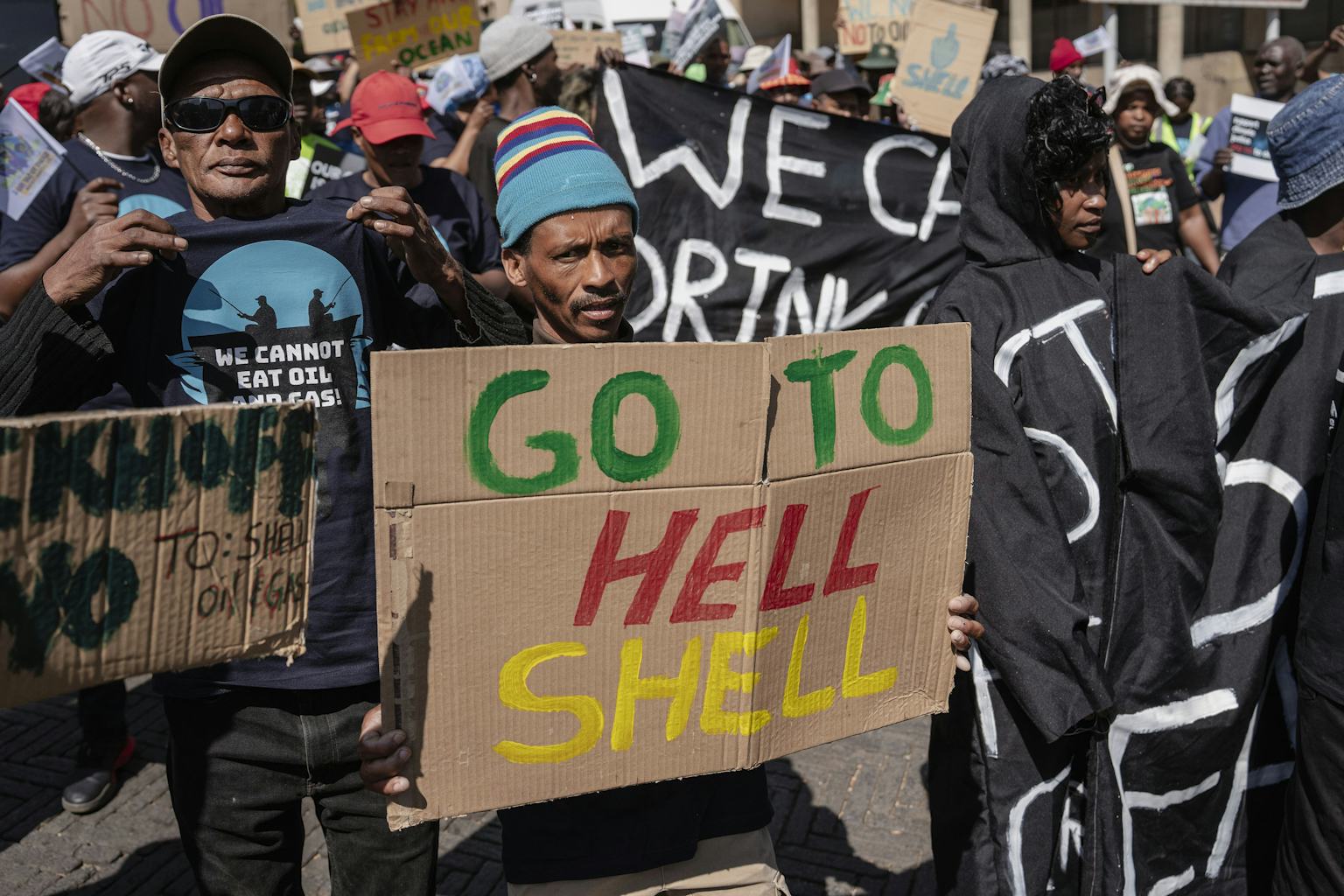
Environmental activists in South Africa have been waging legal battles against the state and mining companies for years. This is often on the grounds that communities haven’t been consulted before mines were given permission to start digging and blasting on their land. Environmental justice researcher Mzingaye Brilliant Xaba has tracked the legal cases against mines since 2015. He analysed court rulings, research and media coverage. His research has found that environmentalists have managed to use lawsuits to firmly establish land rights. This means the state and industry will find it very difficult to launch mining projects without meaningful consultation with communities that will be affected.
What is meaningful consultation and how must it happen?
In practice, meaningful consultation is where:
- Communities that will be affected by a mine are told what will happen, in a truthful and transparent way.
- They are asked for their opinions in good faith. This means without deception, preconceived ideas or a condescending attitude. It also means that mines cannot conduct ‘tick-box’ exercises. These include getting permission from a traditional leader to mine instead of from a whole community (and they consider internal communal differences).
- Communication with communities uses accessible local languages and media outlets.
- Affected communities are given an opportunity to ask questions openly. Community members must be given enough notice of consultation meetings (for example, no advertising a consultation the day before). In 2023, the Constitutional Court ruled that consultation must also allow communities an opportunity to influence a decision.
- Consultation meetings are held in reasonable venues that people can easily access.
- Cultural issues are taken into account, including intangible cultural heritage. An example of this is where seismic surveys in the sea by oil and gas explorers were opposed by South Africa’s Wild Coast community on the grounds of Xhosa cosmology that says “Abantu bomlambo” (ancestors) inhabit the ocean.
- Communities must be given all the information about the planned mine. This allows them to make informed decisions. This includes information about the mining rights, ownership structures, financial competence and other issues.
When a company starts mining, it must follow section 24 of the constitution. It also needs to abide by the 2008 National Environmental Management Waste Act and the 2002 Mineral and Petroleum Resources Development Act. Taken together, these laws say that the state must ensure that decisions about the environment (and to some extent livelihoods) must not be taken without consulting interested and affected parties first. These parties include activists and non-governmental organisations.
Does this happen in practice?
Not often. Instead, a fundamental tragedy happens. The government often pushes for developmental projects on behalf of the industry. Local concerns, rights, views, aspirations and capabilities are often ignored, in a paternalistic way that says government knows what is best.
A classic case of this entitlement by the state and industry occurred in 2008. The then minister of minerals and energy, Buyelwa Sonjica, visited agrarian villages in Xolobeni, on South Africa’s Wild Coast. She told them they needed to accept a titanium mine on their land because they were “poor” and needed development.
In practice, mining projects can also divide communities, even leading to local environmental activists being assassinated. For example, Fikile Ntshangase, a leader in the Mfolozi Community Environmental Justice Organisation, which campaigned against the Tendele Coal Mine’s Somkhele mine, was killed at her home in 2020 after four gunmen arrived and opened fire, shooting her six times.
Local communities have also complained about difficult academic English jargon used by mines in their documents. For example, in 2011, Royal Dutch Shell applied to frack for shale gas in the vast Karoo desert in South Africa. Consultation documents were written in technical English. This meant that the region’s mainly isiXhosa and Afrikaans speakers couldn’t participate meaningfully.
Even where reasonable consultations happen, the state and industry are often evasive in the sense that they treat consultation as a one-off meeting. Part of the problem is that the state and industry are more powerful than local communities.
How have environmentalists pushed back?
The law has brilliantly established how the government must consult with communities. Because of litigation by environmentalists, courts have nullified environmental authorisations to mine and exploration licences because communities hadn’t been consulted properly.
Environmentalists have also pursued lawsuits to cancel mining or exploration licences. They’ve done this on the basis that local communities’ spiritual, customary and intangible cultural heritage would be violated if mining went ahead.
In several cases involving air pollution lawsuits and opposition to coal mines, the courts stopped mining projects which threatened to worsen the climate crisis.
Environmentalists range from well-informed individuals with a wide knowledge on environmental rights, such as lawyers and journalists, to poorly funded grassroots groups. They also include relatively large, and better-funded, non-governmental organisations, which are deeply immersed in research, advocacy and litigation such as groundWork, Earthlife Africa, the Centre for Environmental Rights and others.
All these different environmentalists try to hold the state and industry to account. They have no legislative authority to ban certain developmental projects. Nor do they have the political influence to draw massive crowds to rallies.
My research found that their strategies often involve conducting research to compile reports, and building alliances with other activists. Environmentalists also lobby investors to pull out of environmentally polluting projects, organise protests, and mount litigation.
The Promotion of Administrative Justice Act empowers any individual who will potentially be affected by a proposed development to apply for information about the project that’s been kept a secret. A successful strategy by environmentalists has been to lodge complaints or request information from the state as soon as developers apply for environmental authorisation. If they are ignored, they litigate, effectively pausing the project.
Environmentalists and lawyers have also tried to put a stop to “strategic lawsuits against public participation” (SLAPP lawsuits). This is where companies sue activists for opposing them. In 2022, the Constitutional Court argued that SLAPP litigation was partially unconstitutional.
Where has consultation worked well?
There is no widely reported mining project which had impressive consultation processes.
How can communities have a real say in future?
The South African government needs to take responsibility for improving consultation. It must set up education programmes making communities aware of what meaningful consultation is.
All local languages must be used in consultations, along with local media. The government should provide venues for meetings that are close to the communities that will be affected, and provide transport too.
Academics can also play their part by making communities aware of the nature of proposed developments.
Of particular importance here is free, prior and fully informed consent. Community members must be in a position to make informed decisions. The state must make it possible for all applications for environmental authorisation to be accessible to everyone.
There is also a strong need for funding for the poorly funded grassroots environmentalists’ groups, which often have no income at all.
Mzingaye Brilliant Xaba, Lecturer, National University of Lesotho
This article is republished from The Conversation under a Creative Commons license. Read the original article.
